Electrolyte Complex (UK): Iodine, Vitamin D, Potassium & Magnesium Explained
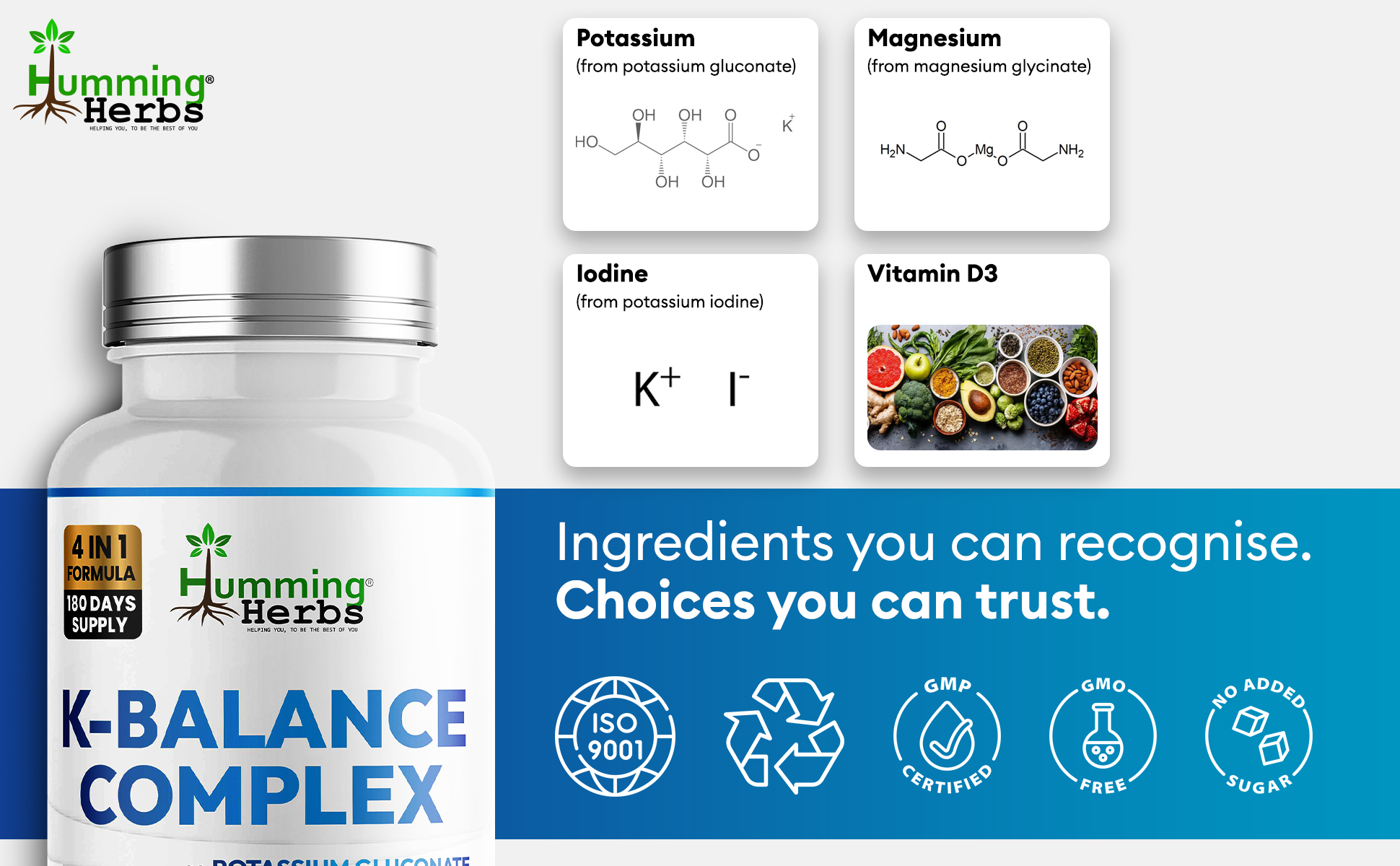 K-Balance Complex is an electrolyte-and-vitamin blend — potassium, magnesium, iodine and vitamin D in a single daily capsule. It's also a perfect example of a quirk in UK supplement law that every shopper should understand: an ingredient can be right there on the label and still not be allowed to carry a health claim. Here's how that plays out in this exact product.
The 15% line
In Great Britain, a nutrient can only carry a health claim if a serving provides at least 15% of its NRV. Below is where each of K-Balance's four nutrients falls. Two clear the bar; two sit just under it.
Green = clears 15% (claims allowed) · amber = below 15% (no claim, whatever the ingredient).
The four nutrients, at a glance
What K-Balance can legitimately claim
Because iodine (93% NRV) and vitamin D (80% NRV) both clear the threshold, their authorised claims apply — and between them they cover a lot of ground:
- Iodine contributes to normal cognitive function, the normal functioning of the nervous system, normal energy-yielding metabolism, and the normal production of thyroid hormones and normal thyroid function.
- Vitamin D contributes to the normal function of the immune system, the maintenance of normal bones and normal muscle function.
Notice what's not on that list: anything pinned to the potassium or magnesium. They're in the capsule, but at 10% and 13% NRV they fall below the line, so no claim can be built on them — even though potassium and magnesium each have well-known authorised claims at higher doses.
Quick questions
It's called K-Balance — isn't it a potassium supplement?
"K" is the chemical symbol for potassium, and yes, potassium is the largest single ingredient by weight (198 mg). But at 10% NRV it doesn't reach the level needed for a potassium claim. Think of it as a balanced electrolyte-plus blend rather than a high-dose potassium product.
Why don't the potassium and magnesium "count"?
They count nutritionally — they still contribute to your intake. What they can't do here is anchor a health claim, because UK rules require 15% of the NRV per serving before any claim is permitted, and both land just short.
Then what's the iodine doing in an "electrolyte" product?
Iodine is included at a generous 93% NRV, and it's the ingredient carrying most of the formula's authorised claims — particularly around thyroid function and metabolism. A little goes a long way, which is why the microgram dose still clears the bar so comfortably.
Who might it suit?
People wanting a gentle daily top-up of iodine and vitamin D, with a modest amount of potassium and magnesium alongside. If your priority is a high dose of any single mineral, a dedicated single-nutrient product would serve you better.
Iodine & your thyroid. Iodine is essential but has a relatively narrow comfortable range. If you have a thyroid condition, take thyroid medication, or are pregnant or breastfeeding, check with your doctor before adding an iodine-containing supplement, and avoid stacking several iodine sources at once.
How to take it
One capsule a day — the 180-capsule tub is a six-month supply. Take with water, with or without food, and don't exceed the stated dose. Food supplements are not a substitute for a varied, balanced diet and a healthy lifestyle.
Transparent labelling
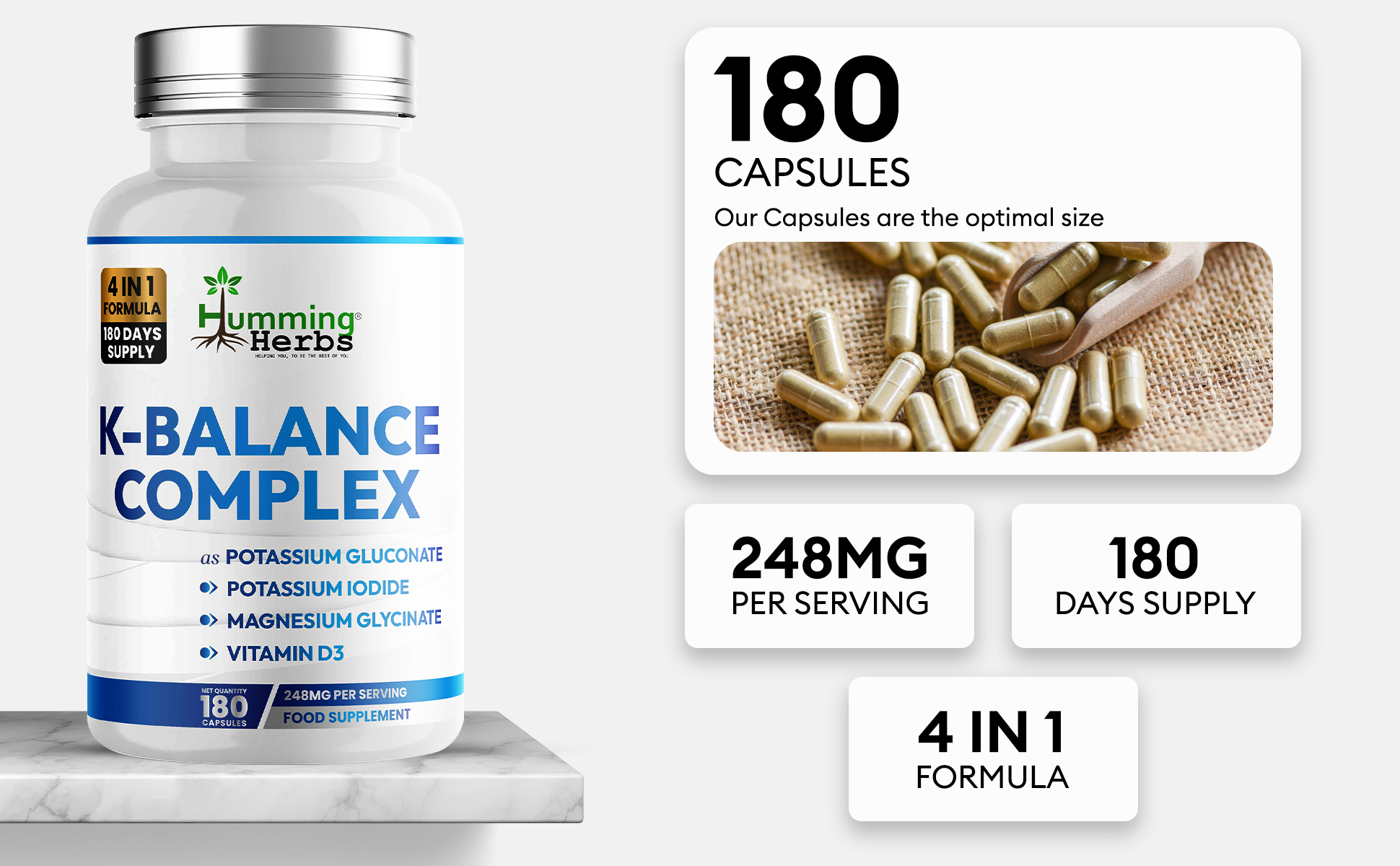 Every nutrient, its source and its % NRV are stated openly — which is exactly what lets you run the 15%-line check for yourself. Batch documentation is available on request.
References & further reading
- Great Britain Nutrition and Health Claims (NHC) Register — iodine & vitamin D claims and the 15% NRV condition: gov.uk/…/great-britain-nutrition-and-health-claims-nhc-register
- NHS — Iodine: nhs.uk/conditions/vitamins-and-minerals/iodine
- NHS — Vitamin D: nhs.uk/conditions/vitamins-and-minerals/vitamin-d
This article is for general information and is not medical advice. Food supplements should not replace a varied, balanced diet or a healthy lifestyle. If you have a thyroid condition, take medication, or are pregnant or breastfeeding, speak to a qualified health professional before using an iodine-containing supplement. Do not exceed the stated dose.
Comments (0)