TMG (Betaine) in the UK: What It Is, How People Take It & How to Choose
TMG — trimethylglycine, also called betaine — has quietly become a favourite in the biohacking and fitness worlds. This guide explains what it is in plain English, why it's paired with B-vitamins, which claims are actually allowed, and how to choose a quality product in the UK.
What is TMG?
TMG stands for trimethylglycine — a compound also known as betaine (specifically betaine anhydrous). It occurs naturally in foods like beetroot, spinach and wholegrains, and takes its name from beets (beta). Its defining feature is that it's a "methyl donor" — it plays a part in the body's methylation processes, which is the basis of its one authorised claim.
The homocysteine connection — and the authorised claims
Every nutrient in our 4-in-1 formula shares one authorised role: contributing to normal homocysteine metabolism. That's a genuinely joined-up formula, not a random blend:
The betaine claim applies when you get 1.5 g of betaine a day — which is exactly what our 3-capsule serving provides. (Betaine intake should not exceed 4 g/day.) Folate, B6 and B12 add further authorised roles, including B6 and B12 contributing to the reduction of tiredness and fatigue.
How people take TMG
General information only — follow your product's label. TMG is commonly taken daily with food; ours is a three-capsule serving providing 1.5 g of betaine. Some people in fitness circles take it around training, but for the homocysteine claim it's simply the daily 1.5 g that matters.
Safety & who should be cautious
How to choose a quality TMG supplement
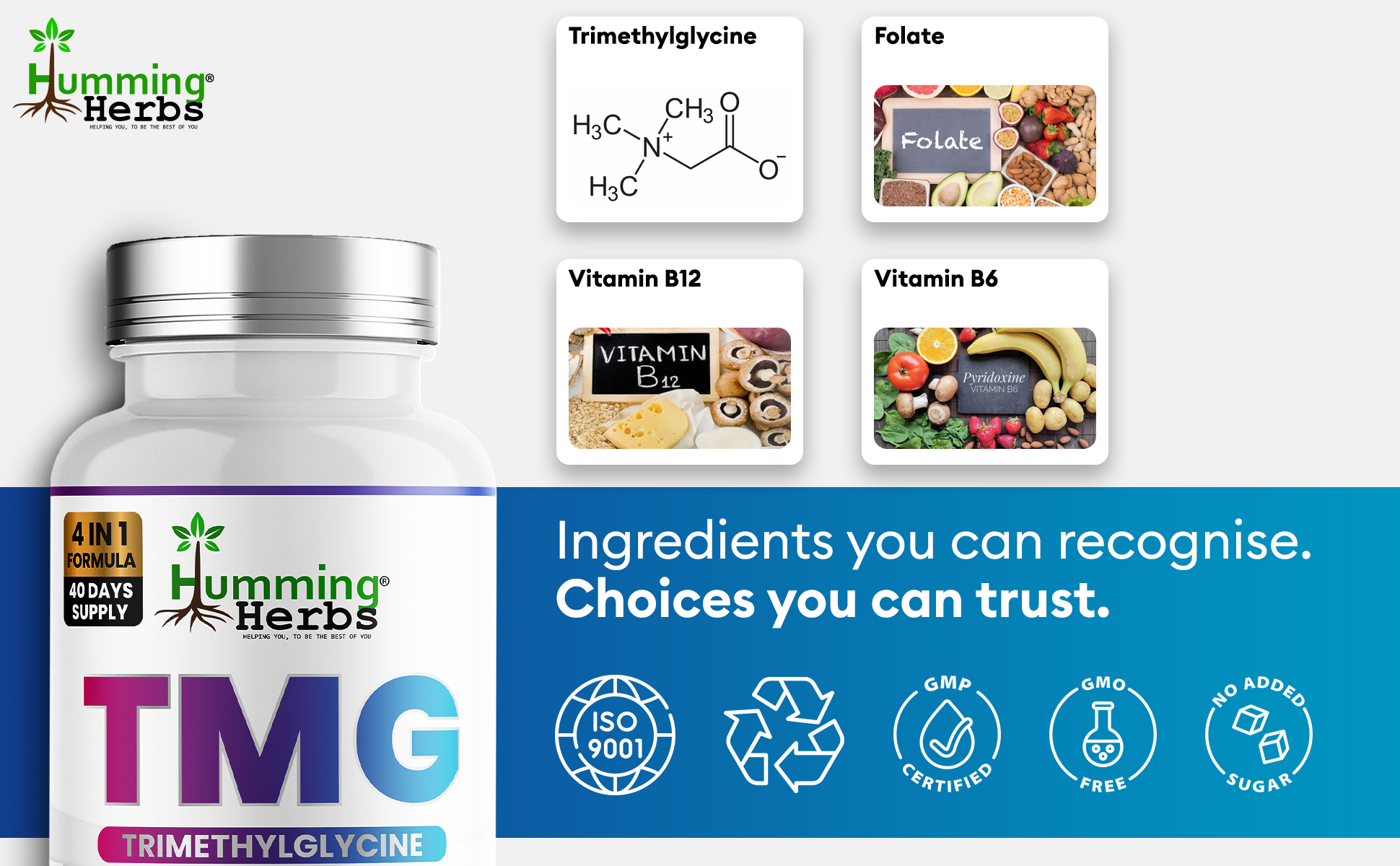
- Betaine per serving. For the homocysteine claim, the serving needs to provide 1.5 g of betaine — check the label.
- Sensible companions. Folate, B6 and B12 complement betaine's methylation role and add their own authorised claims.
- Quality folate form. Look for an active folate (like 5-MTHF) rather than only folic acid.
- Third-party testing with a Certificate of Analysis available.
- GMP manufacture, full labelling, reputable UK seller.
Humming Herbs TMG
A 4-in-1 delivering 1.5 g betaine with active folate (5-MTHF), vitamin B6 and B12 — all four contributing to normal homocysteine metabolism. Third-party tested; full Supplement Facts on the product page.
References & further reading
- Great Britain Nutrition and Health Claims (NHC) Register — the authorised claims for betaine, folate, vitamin B6 and B12.
- PubMed — research on betaine (TMG) and homocysteine (background reading; not a substitution for the authorised claim wording).
Comments (0)