Eye-Health Supplements in the UK: What's in Them & How to Choose
"Eye health" supplements are everywhere, and they're often sold on ingredients you can't actually make claims about. This guide is the honest version: what's typically in an eye formula, which parts carry authorised claims, which are there for other reasons, and how to choose a quality product in the UK.
The nutrients with authorised claims
Each one-capsule serving provides four nutrients above the 15% NRV threshold — two of them relate directly to vision:
Vitamin A and zinc both contribute to the maintenance of normal vision — a genuine, on-topic, label-checkable basis for an eye formula. Vitamin E and copper add protection of cells from oxidative stress.
The recognisable eye ingredients (for context)
Our formula also includes the carotenoids and botanicals people look for in an eye supplement. We can't make claims for these — but they're included, clearly labelled, so you know what you're getting:
How people take an eye formula
General information only — follow your product's label. Ours is a convenient one-capsule daily serving, typically taken with food (the carotenoids are fat-soluble, so a meal with some fat can help).
Safety & who should be cautious
How to choose a quality eye supplement
- Check the %NRV nutrients. Vitamin A and zinc (for the vision claim) should be at meaningful levels — the label will show it.
- Meaningful carotenoid amounts. If lutein/zeaxanthin matter to you, look for stated amounts rather than a token dusting.
- Third-party testing with a Certificate of Analysis available.
- Clean label, full disclosure, GMP manufacture, reputable UK seller — and no promises to "improve eyesight", which aren't allowed.
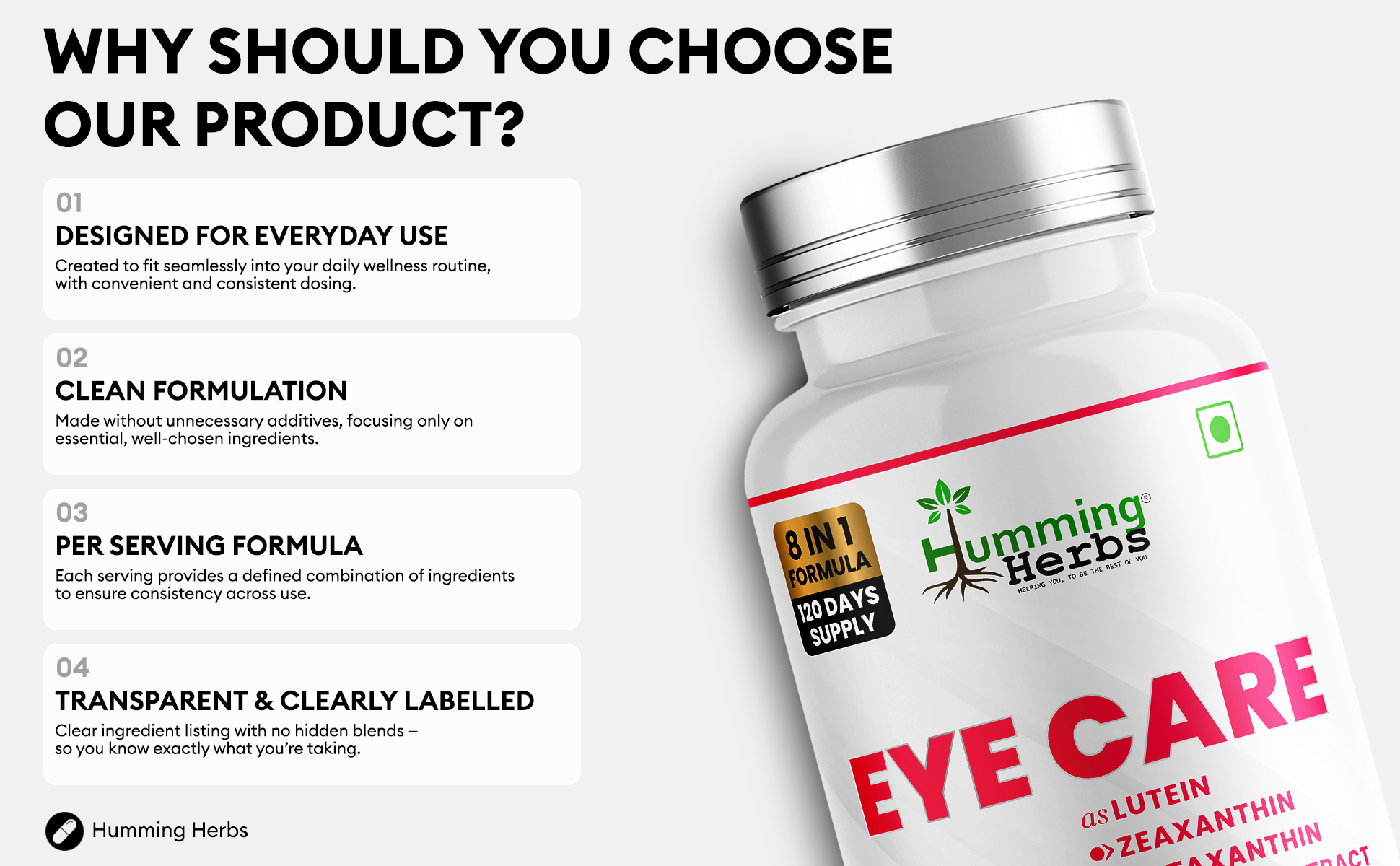
Humming Herbs Eye Care
An 8-in-1 combining lutein, zeaxanthin, astaxanthin and bilberry with vitamin A, zinc, vitamin E and copper. Vitamin A and zinc contribute to the maintenance of normal vision; vitamin E and copper to the protection of cells from oxidative stress. Third-party tested; full Supplement Facts on the product page.
References & further reading
- Great Britain Nutrition and Health Claims (NHC) Register — the authorised claims for vitamin A, zinc, vitamin E and copper.
- GOV.UK — Nutrition and health claims: guidance to compliance.
Comments (0)