Citrus Bergamot in the UK: What It Is, How People Take It & How to Choose a Quality Supplement
Citrus bergamot has become one of the most searched-for supplements in the UK — often alongside some fairly bold claims. This guide cuts through the hype with something more useful: a straight explanation of what citrus bergamot is, how people take it, what to watch out for, and how to choose a quality product.
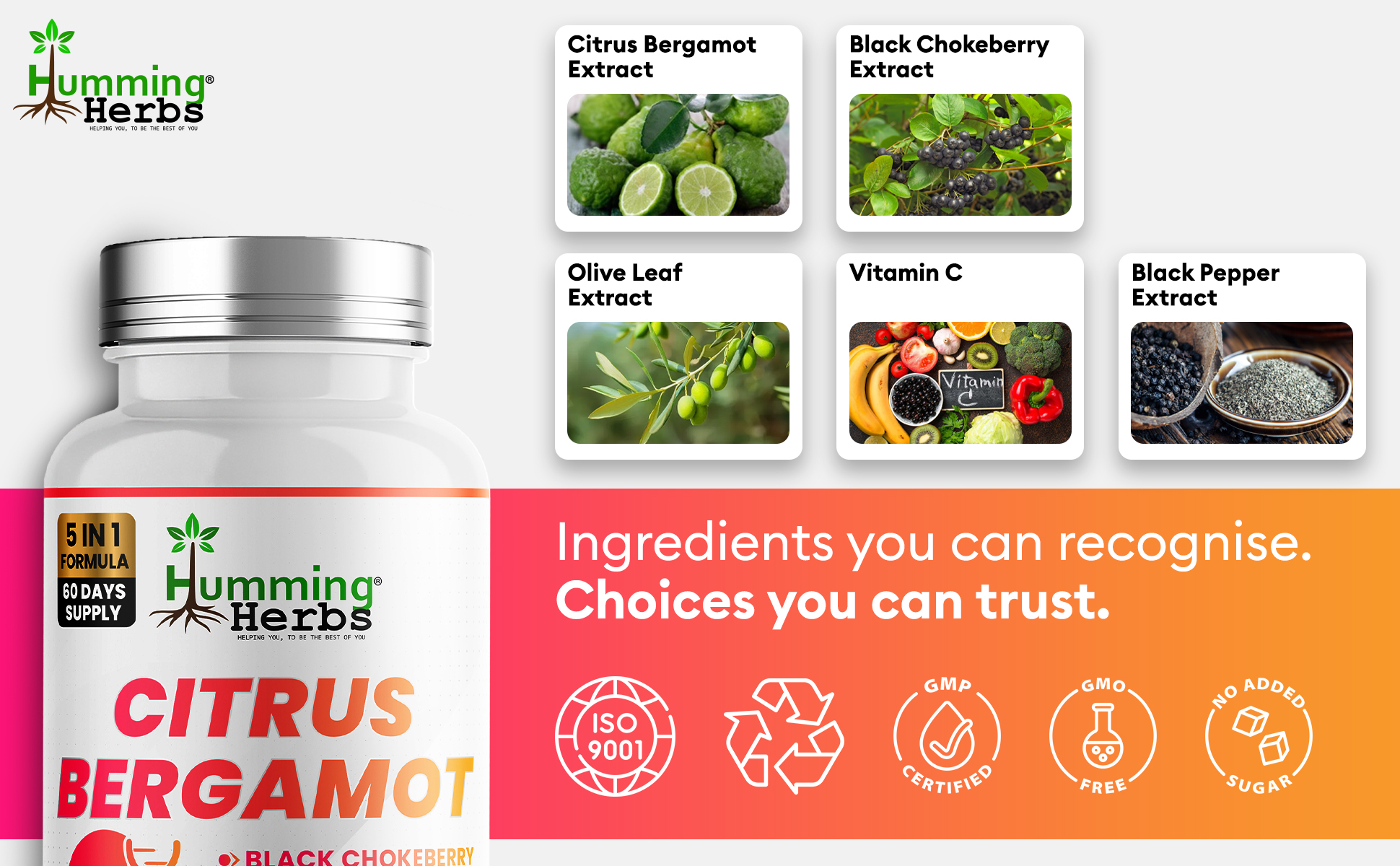
What is citrus bergamot?
Citrus bergamot (Citrus bergamia) is a fragrant citrus fruit grown almost exclusively in the Calabria region of southern Italy, where the climate suits it particularly well. It's a relative of oranges, lemons and grapefruit.
What makes it interesting to supplement makers is that the fruit is unusually rich in polyphenols — plant compounds including flavonoids such as neoeriocitrin, neohesperidin and naringin, plus two that are fairly distinctive to bergamot, brutieridin and melitidin. In supplements you'll often see the extract described as a Bergamot Polyphenolic Fraction (BPF), standardised to a certain percentage of these polyphenols.
What's in each daily serving
Our formula pairs a standardised citrus bergamot extract with a few complementary botanicals and added vitamin C. Here's the actual per-serving breakdown (2 capsules), straight from the Supplement Facts:
Bars are illustrative of relative amounts. Vitamin C's 94% NRV is the only authorised health-claim nutrient in the blend (see below). Food supplement — 2 capsules per serving.
The vitamin C connection
Many citrus bergamot formulas — including ours — include added vitamin C. Vitamin C is a nutrient that does carry authorised GB/EU health claims when a serving provides a meaningful amount (at least 15% of the Nutrient Reference Value). Ours provides 75 mg, or 94% of the NRV, so these apply:
- Vitamin C contributes to the normal function of the immune system.
- Vitamin C contributes to the protection of cells from oxidative stress.
- Vitamin C contributes to the reduction of tiredness and fatigue.
These claims belong to vitamin C, not to bergamot — but they're a genuine, label-checkable benefit of a bergamot-plus-vitamin-C formula, and a good reason to read the Supplement Facts rather than the front of the pack.
How people take citrus bergamot
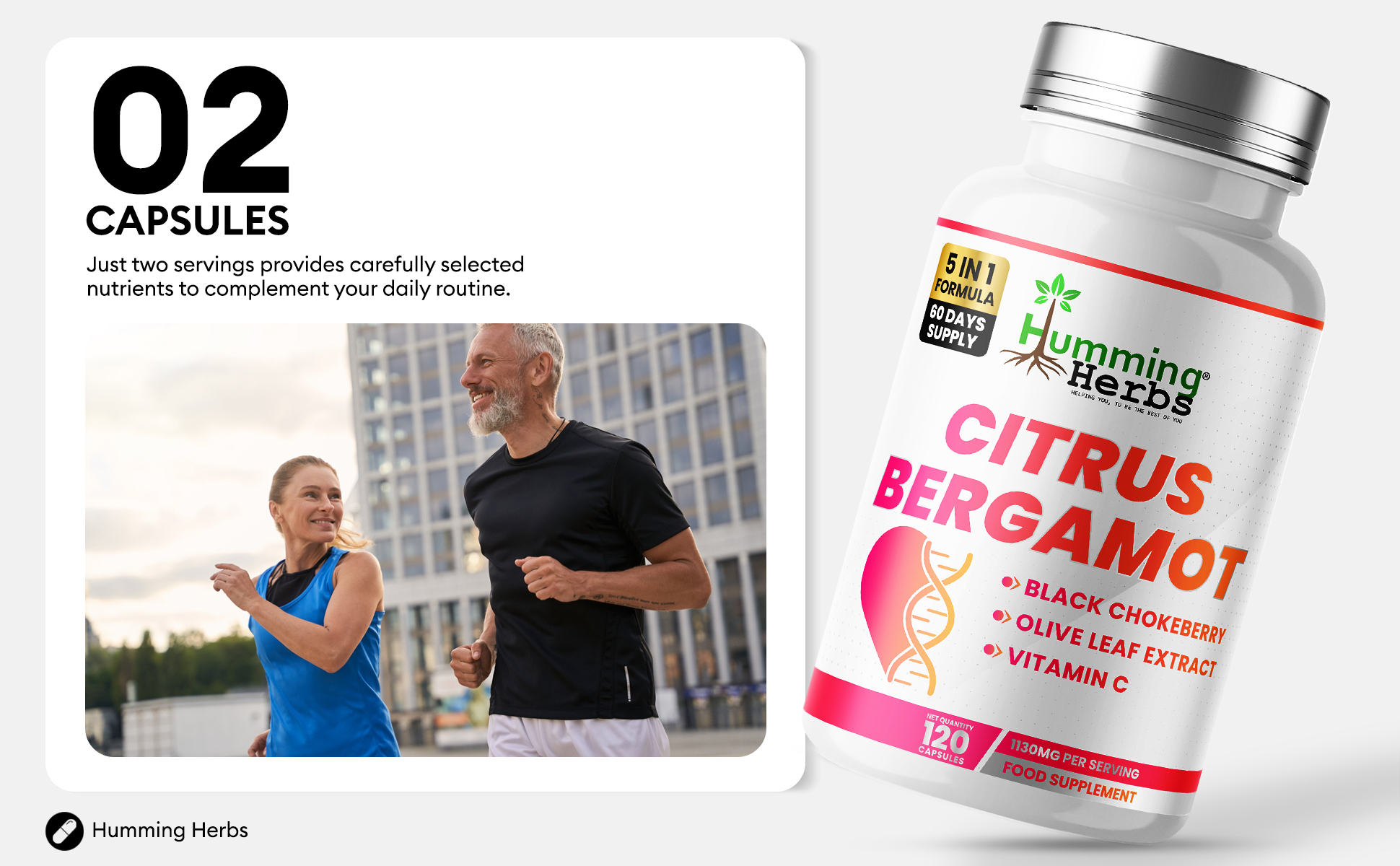
General information, not a personal recommendation — always follow your product's label and ask a pharmacist if unsure.
- Amounts: bergamot extract is commonly taken in servings of roughly 500–1000 mg a day, usually standardised to a set percentage of polyphenols (BPF).
- Timing: it's typically taken with food, often before a meal, as part of a daily routine.
- Standardisation matters: because it's the polyphenol content that products are built around, the standardised extract is what most quality supplements use.
Safety, interactions & who should be cautious
Citrus bergamot is generally well tolerated, but a few points are worth knowing.
The grapefruit-family point — important if you take medication
Bergamot is a close relative of grapefruit, and grapefruit is well known for affecting how the body processes certain medicines (it influences an enzyme called CYP3A4 that many drugs depend on). It's sensible to treat bergamot with the same caution. If you take any medication — statins in particular, but others too — please check with your GP or pharmacist before taking citrus bergamot.
Who should be cautious or avoid it
- Pregnant or breastfeeding women — there isn't enough safety information, so it's best avoided.
- Anyone on medication or managing a health condition — get personalised advice first.
- Before surgery — tell your medical team about any supplements you take.
How to choose a quality citrus bergamot supplement
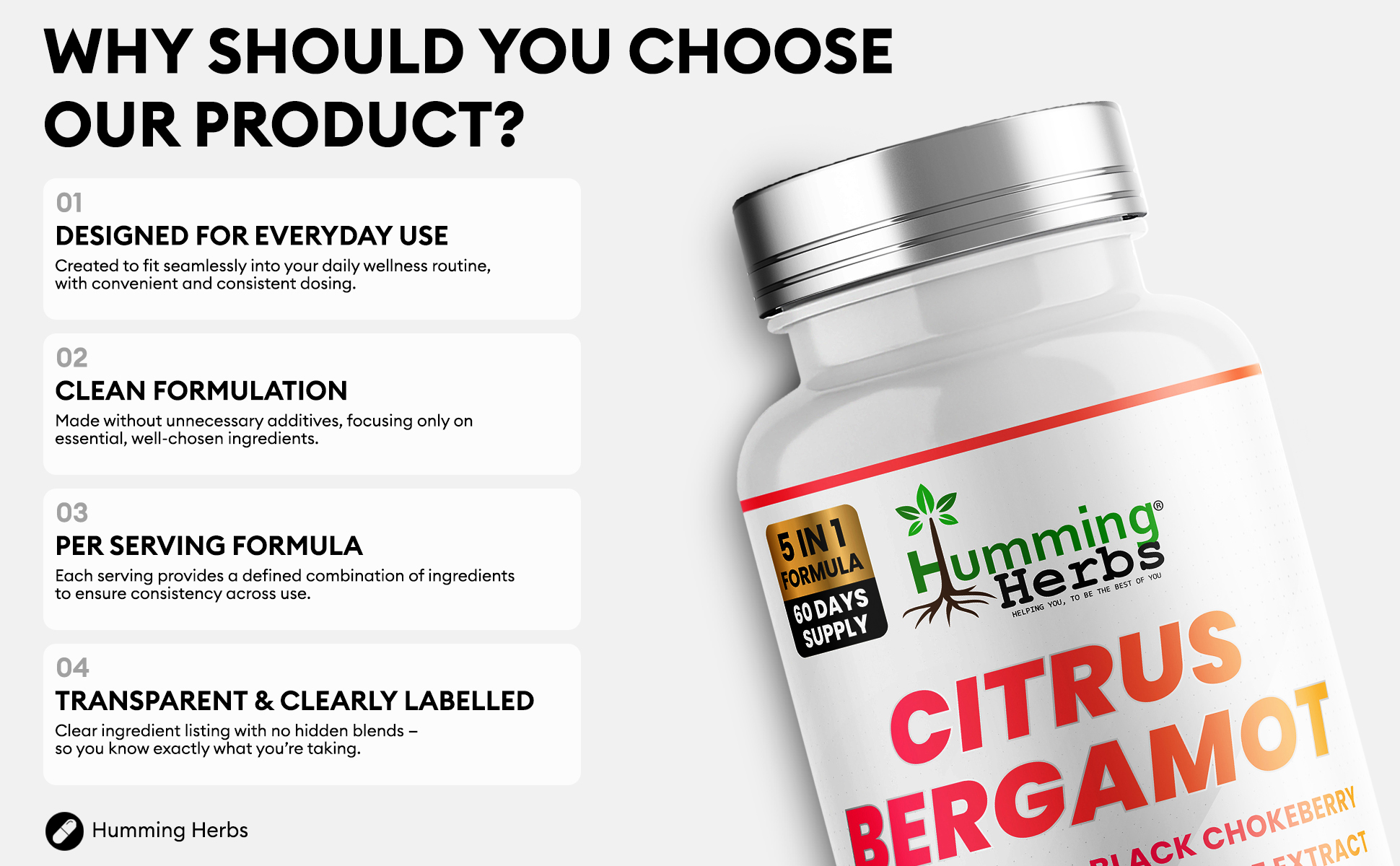
- Standardised polyphenol content. Look for an extract standardised to a stated percentage of polyphenols or BPF — that's the meaningful measure, not just the milligrams of "bergamot".
- Strength per serving. Check the actual amount per capsule and per daily serving.
- Third-party testing. Independently tested for purity and contaminants, with a Certificate of Analysis available.
- Sensible added nutrients. Added vitamin C brings its own authorised claims when present at a meaningful level.
- Made to good standards. GMP manufacture, full ingredient and allergen labelling.
- An honest UK seller. Clear contact details and no dramatic cholesterol or heart claims — if a bergamot product promises to fix your cholesterol, that's a red flag, not a feature.
Humming Herbs Citrus Bergamot
Our citrus bergamot is third-party tested and includes added vitamin C, which contributes to the normal function of the immune system and to the protection of cells from oxidative stress. You can check the full Supplement Facts on the product page.
Frequently asked questions
Does citrus bergamot lower cholesterol?
We're not able to tell you that. In the UK, citrus bergamot is a food supplement, and there's no authorised health claim that it affects cholesterol. If you're concerned about your cholesterol, the best move is to speak to your GP or pharmacist. What we can tell you is what citrus bergamot is, how people take it, and how to choose a quality product.
Is the supplement the same as bergamot essential oil?
No. The supplement is a polyphenol extract from the fruit; the essential oil is an aromatic oil from the peel used in flavouring and aromatherapy. They're not interchangeable.
Can I take citrus bergamot with statins?
Check with your GP or pharmacist first. Bergamot is a grapefruit relative, and grapefruit is known to affect how some medicines (including statins) are processed, so this is one to clear before you start.
References & further reading
- Great Britain Nutrition and Health Claims (NHC) Register — the official list of authorised claims (including those for vitamin C).
- GOV.UK — Nutrition and health claims: guidance to compliance.
- PubMed — research on the citrus bergamot polyphenolic fraction (BPF) (background reading; not a substantiation of any health claim).
- PubMed — grapefruit, CYP3A4 and medicine interactions.
Comments (0)